正在打开每日关注
autoskills:按项目栈筛选 Agent 技能
按项目技术栈自动筛选、校验并锁定 Agent 技能,减少全局冗余与冲突。
来源摘录
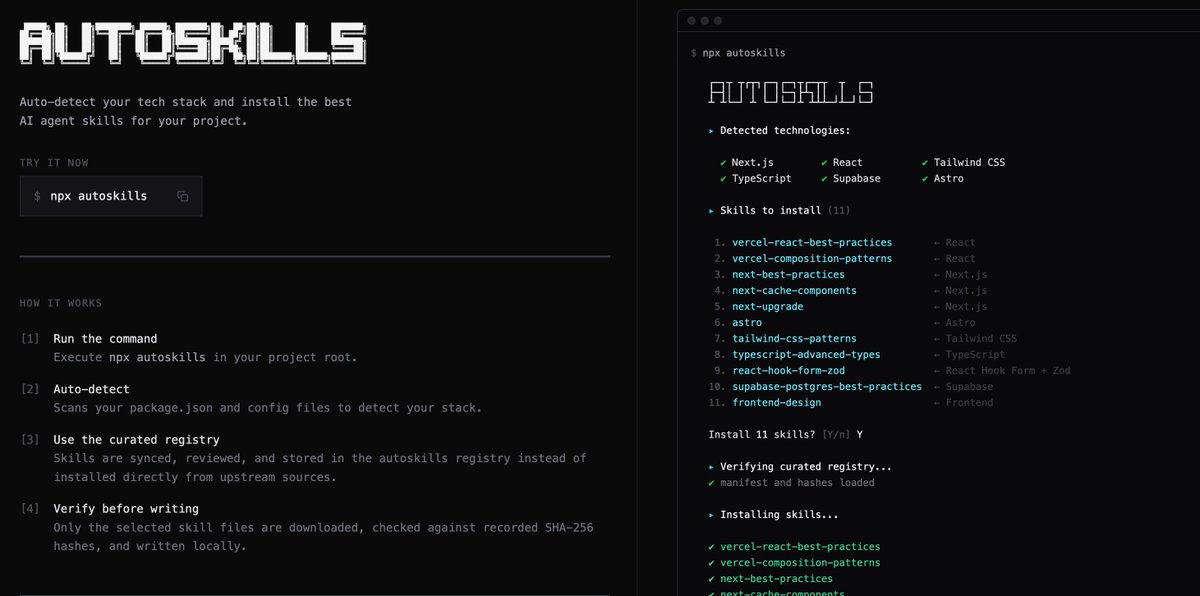
Yesterday I deleted another batch of local 𝗖𝗼𝗱𝗲𝘅 𝗮𝗻𝗱 𝗖𝗹𝗮𝘂𝗱𝗲 𝗖𝗼𝗱𝗲 𝘀𝗸𝗶𝗹𝗹𝘀. Models got good enough that some general-purpose skills stopped adding much. Some still covered the same jobs. The agent had a longer list and conflicting rules to resolve. I used to install first. Once the pile got big, I'd figure out which skills did nothing and delete them. Today I found a 𝟲.𝟯𝗞-𝘀𝘁𝗮𝗿 𝗿𝗲𝗽𝗼 𝗰𝗮𝗹𝗹𝗲𝗱 𝗮𝘂𝘁𝗼𝘀𝗸𝗶𝗹𝗹𝘀 that filters candidates before writing a single file: The maintainers keep its registry in sync. On each run, autoskills pulls only the skills that match the current project: → scans package.json, Gradle files, and project config → detects React, Next.js, SwiftUI, Stripe, and the rest of the stack → selects matching skills from a curated registry → uses registry entries that maintainers scan for prompt injection and supply-chain risks → checks every file against the manifest with SHA-256 before writing it → records sources and bundle hashes in skills-lock.json 𝗗𝗿𝘆-𝗿𝘂𝗻 𝗺𝗼𝗱𝗲 shows the install list without touching any files. I'd use autoskills to find candidates, then decide what to install after the dry run. I'd keep only 𝘁𝘄𝗼 𝗸𝗶𝗻𝗱𝘀 𝗼𝗳 𝘀𝗸𝗶𝗹𝗹𝘀: skills with project knowledge the model can't infer, and skills that provide real commands, tools, or verification workflows. Framework-specific skills stay inside each project. I'm done building another global skill landfill lol.
深度解析
是什么 这条推文把 autoskills 定位为项目级 Agent 技能安装筛选器:运行命令后,它扫描 package.json、Gradle 文件和项目配置,识别当前技术栈,从维护者同步的精选注册表中挑选匹配技能,并在写入前做安全与完整性检查。截图用 Next.js、React、Tailwind CSS、TypeScript、Supabase、Astro 和 11 个待安装技能展示这条链路。
核心设计 重点不是扩大全局技能数量,而是把选择前置到安装之前。dry-run 让用户先看清候选清单;manifest、SHA-256 和 skills-lock.json 提供文件校验、来源与 bundle hash 记录,降低误装、篡改和来源不明的风险。作者建议只保留模型无法推断的项目知识,以及能提供真实命令、工具或验证流程的技能。
关键洞察 技能越多不一定越强,重复或冲突规则会增加 Agent 的决策负担。按项目隔离框架技能,有助于把全局环境从“技能仓库”收敛成最小运行集。
边界与风险 推文没有给出代码架构、检测覆盖率或注册表治理细节,不能据此保证技能质量。哈希能证明文件一致性,却不等于内容安全;检测误判、注册表过时和提示注入仍需人工审阅。实践上应先 dry-run,再检查来源与锁文件,最后安装必要项。