正在打开每日关注
用设计循环让 AI 代理持续遵循设计系统
通过文件化设计契约与截图评审,让多代理按表面持续迭代并保持产品一致性。
来源摘录
When building UI with AI agents, design work starts fresh on every prompt. This can get really frustrating when you are trying to follow a design system in a large codebase across many agents. A *WIP* solution I have been building is /design-loop. It’s a design engineering loop for Codex + Claude code. How it works: it reads your codebase, creates a /design.md contract, builds a backlog, then improves one surface at a time. It asks you questions around the design and helps you establish an initial system if you don't have anything set up. It follows this pattern: brief → design references → implementation → visual review (screenshots) → human critique → revision. Your design taste should live in files, not in the agent’s temporary context. The system also tracks what decisions have been made, what patterns should repeat, what should be removed, and what the product should not become. Constraints to hopefully make the output better. Disclaimer: expect continual iterations of this skill.
深度解析
是什么 这条推文提出的 /design-loop 是面向 Codex 与 Claude Code 的设计工程工作流,试图把设计偏好从代理的临时上下文迁移到代码库中的持久化文件。它不是一次性生成 UI 的提示词,而是围绕具体界面持续推进的协作循环。
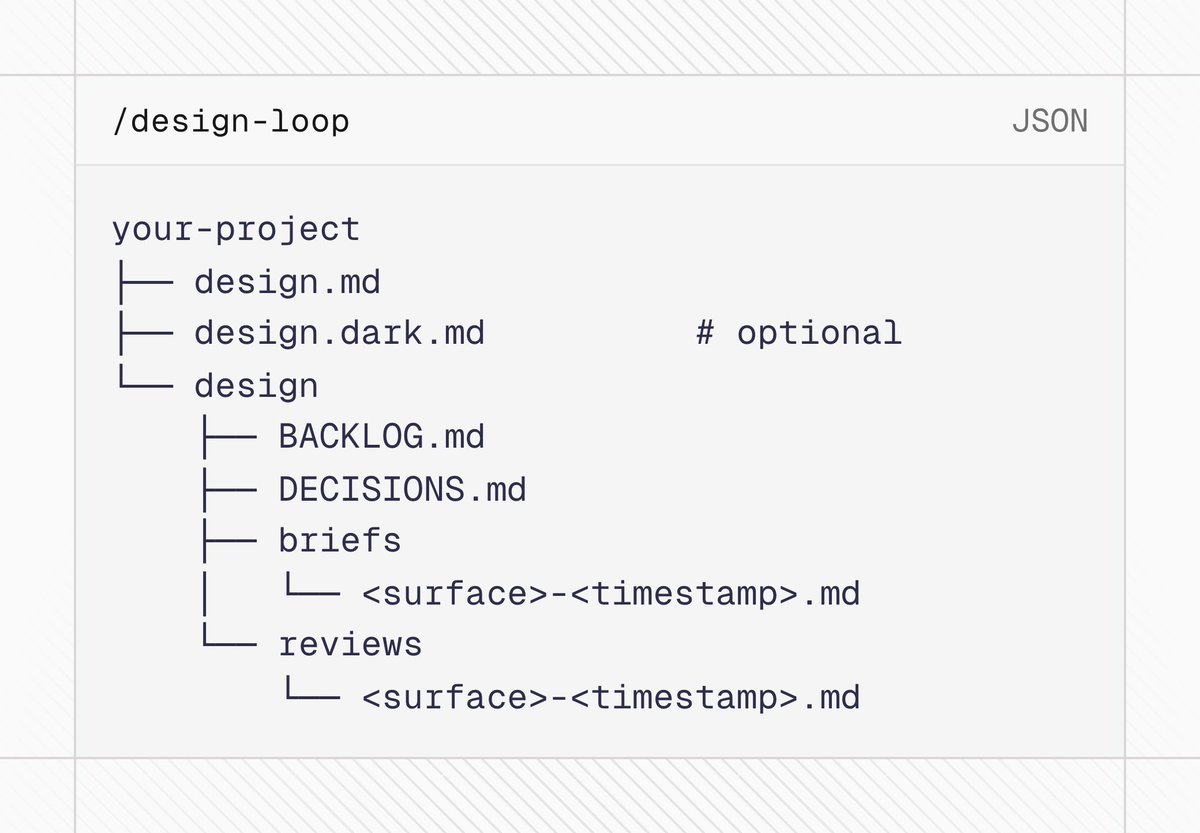
核心设计 流程由 brief、设计参考、实现、截图视觉评审、人工批评和修订组成。图片展示了相应的文件化骨架:design.md 作为主契约,design.dark.md 可选;BACKLOG.md 与 DECISIONS.md 记录进度和决策,briefs 与 reviews 则按 surface 和 timestamp 保存局部任务及评审结果。按 surface 迭代能缩小问题范围,也更利于多个代理共享同一套约束。
关键洞察 设计系统真正的价值不只在颜色、字体和组件,更在于可复用模式、明确决策以及“产品不应变成什么”的边界。把这些内容写入仓库,可降低跨会话、跨代理的风格漂移,并形成可追溯的设计知识库。
边界与风险 项目仍处于 WIP,且作者明确预期持续迭代。文件可能与实际界面脱节,代理也可能忽略契约;截图评审不能替代可用性、无障碍和真实用户验证。要落地还需要明确文件更新责任、评审标准和冲突处理方式。